
Nano News
Looking inside Nanolive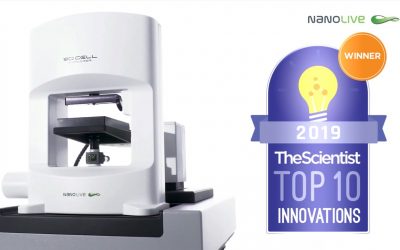
Nanolive amongst the winners of The Scientist’s Top 10 Innovations of 2019
Every year The Scientist identifies the latest and best technologies and techniques in the life-science industry. Nanolive is proud to have been selected for our newest microscope - the CX-A - the world's first walk-away solution for label-free, long-term live cell...
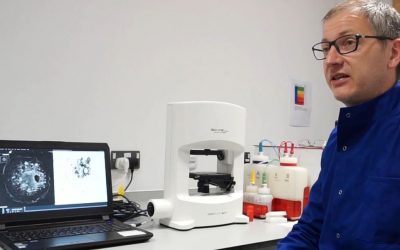
3D Exploration of Living Cells at Coventry University
The Lab+ at the University of Conventry uses the 3D Cell Explorer for teaching undergrad cell biology students. The lab allows students to connect together different concepts and different parts of practicals in order to hopefully give them a real passion for science...
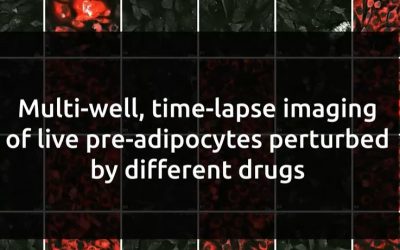
New Application Note: Investigating multiple drug-induced perturbations with Nanolive’s Automated live cell imaging
We are happy to present you our newest application note. In this application note we will discuss the new research possibilities offered by Nanolive's newest microscope, the CX-A, for the study of drug-induced perturbations. In detail, you can: Learn how Nanolive’s...
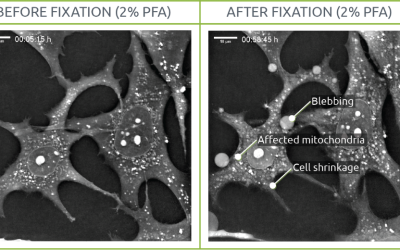
PFA fixation test: the effects on live cell imaging
In life sciences, fixation refers to the process of preservation of histological, cytological and microbiological specimens such as cells and tissues at the status they were originally taken. A protocol of fixation usually precedes immunostaining, which is essential...
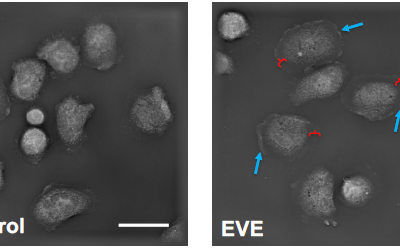
New publication: E-cigarette use increases susceptibility to bacterial infection by impairment of human neutrophil chemotaxis, phagocytosis and NET formation
Nanolive is proud to announce a new publication in the American Journal of Physiology – Cell Physiology by our customers at the University of California San Diego in the United States[1]. E-cigarettes are a popular alternative to conventional tobacco, usually sold as...

Nanolive attending SPAOM 2019: the Spanish & Portuguese Advanced Optical Microscopy from 6 – 8 November
From the 6 - 8 November we will be attending the SPAOM 2019 in Coimbra, Portugal, where we will be presenting our poster "Phototoxicity in live cell imaging: the evil within".To learn more about how to overcome phototoxicity, please visit our dedicated page here. We...
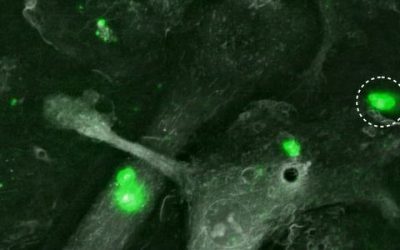
Tumor-derived extracellular vesicles uptake in mouse macrophages
Tumor-associated macrophages secrete extracellular vesicles (EVs) that range from a variety of sizes and subcellular origins[1]–[5]. Exosomes (30-150nm) are a type of EVs originated from endosomal multivesicular bodies[4], [6]. Other types of EVs result from the...
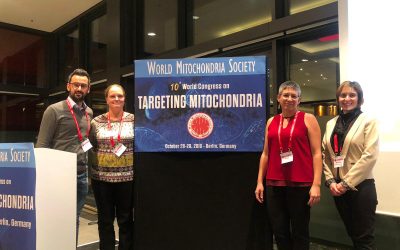
Nanolive wins the Innovation Prize of the World Mitochondria Society
This week's venue the "10th Targeting Mitochondria Congress" was a full success for Nanolive. It is an honor to share with you that Nanolive won the Innovation Prize of the World Mitochondria Society! Nanolive is very proud to have been recognized in this important...
Nanolive at “10th Imaging the Cell” conference in Lyon, France this November 4-6
We are happy to announce that we will be at the "10th Imaging the Cell" conference in Lyon, France from the 4th to 6th of November. Please join our talk on Monday 4th November at 12h45 and a workshop organized by one of our customer (Gabriel ICHIM). We are looking...
Nanolive at the “Targeting Mitochondria Congress” in Berlin this October 27 – 29
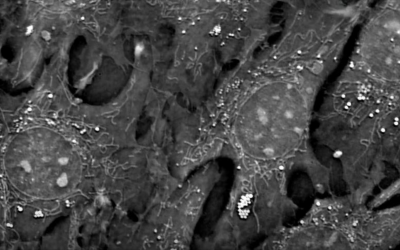
Video caption: Label-free live cell imaging of a Preadipocyte cell where healthy mitochondria (long filaments) can be appreciatedNanolive is happy to announce that we will participate with a talk and a booth in the "Targeting Mitochondria Congress" from 27th to 29th...
New Webinar on Phototoxicity: The evil within
Nanolive will be hosting a new webinar with the title Phototoxicity: The evil within on the 29th of October 2019. You can subscribe here. The webinar will focus on presenting a recent study realized in collaboration with Ecole Polytechnique Féderale de Lausanne...
Win a bottle of Champagne with Nanolive’s new phototoxicity challenge
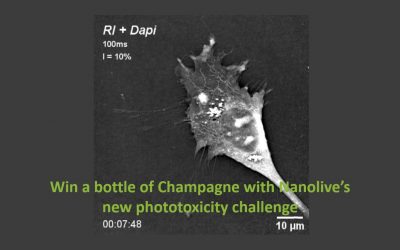
Call to all microscopists! Nanolive has had a number of scientific discussions recently on whether fluorescence based live cell imaging observations on cell/organelle dynamics and morphology can lead to incorrect conclusions if phototoxicity is not controlled for....
Migration in CD34+ Human Cord Blood Hematopoietic stem/progenitor cells
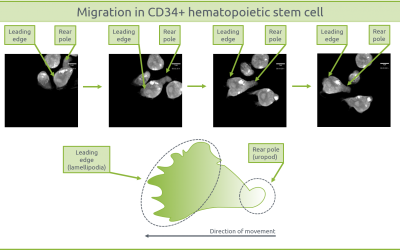
Role of migration in Hematopoietic Stem/Progenitor Cells Hematopoietic Stem Cells (HSC), as we mentioned in our previous post featuring mitosis in CD34+ Human Cord Blood HSC (https://vkv7flpfqbb.c.updraftclone.com/cd34-mitosis/), are multipotent cells that can...
Nobel Prize goes to William G. Kaelin Jr., Sir Peter J. Ratcliffe and Gregg L. Semenza “for their discoveries of how cells sense and adapt to oxygen availability”
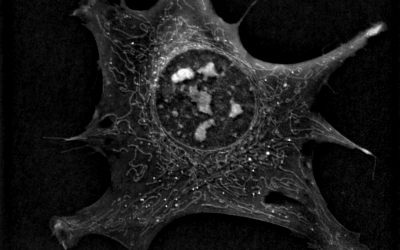
Nanolive wants to congratulate the 2019 Nobel Prize in Physiology or Medicine which was assigned today to William G. Kaelin Jr., Sir Peter J. Ratcliffe and Gregg L. Semenza for their discoveries of how cells sense and adapt to oxygen availability. Their research...
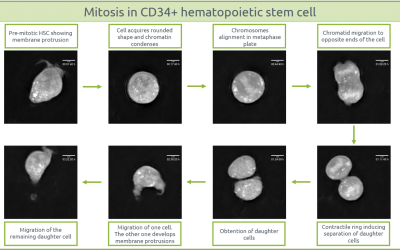
Division in CD34+ Human Cord Blood Hematopoietic stem/progenitor cells
Hematopoietic Stem/Progenitor Cells Hematopoietic Stem Cells (HSC) are cells isolated primarily from bone marrow and umbilical cord blood. They can self-renew and differentiate into many different types of blood cells [1] (Figure 1). These characteristics raised the...
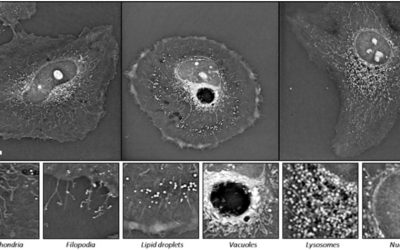
Nanolive imaging seminar in Padua, Italy
This Friday 13th September 2019 the University of Padua hosts Nanolive and our Italian distributor Media System Lab for a seminar dedicated to label-free live-cell imaging for cell metabolism and intracellular infections. Looking forward to meeting you there!When?...
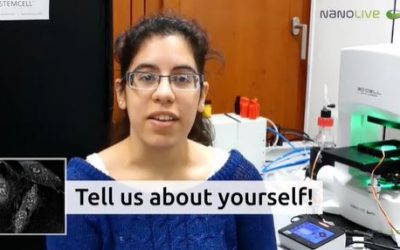
“This week was fantastic” – The Scientist of Tomorrow 2019 visits Nanolive!
Almudena spent a great one-week training at Nanolive’s headquarters in Lausanne last week. She was able to conduct great experiments and learn how to work with the 3D Cell Explorer. “It’s interesting to see them moving because you usually just see pictures – so that...
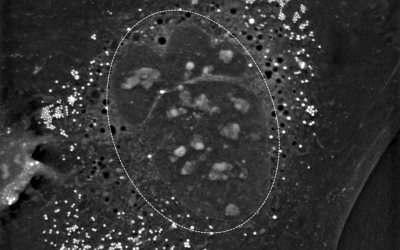
Lamellar Bodies and Keratohyalin Granules in Normal Human Epidermal Keratinocytes
Keratinocytes and Epidermis The outer layer of the skin, the epidermis, is composed mainly by keratinocytes, which represent around 90% of the cells in that layer[1], [2]. They play a role in immune responses, by acting as barrier and preventing the entrance of...