
Nano News
Looking inside Nanolive
Nanolive at Basel Life MipTec 2019 – September 10 to 12
Nanolive will be exhibiting at Basel Life MipTec 2019 from September 10 to 12. We would be happy to see you at our booth D10 and discuss with you label-free live cell imaging solutions.We will be participating in the following events:Industry Symposium Session title:...
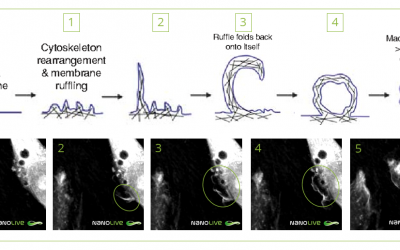
Protrusions in Human Umbilical Vein Endothelial Cells
Endothelial cells, as mentioned in our previous blogpost (https://vkv7flpfqbb.c.updraftclone.com/failed-mitotic-exit-in-human-umbilical-vein-endothelial-cells/), constitute the inner layer of blood and lymphatic vessels. They also play a role in substance and cell...
Failed mitotic exit in Human Umbilical Vein Endothelial Cells
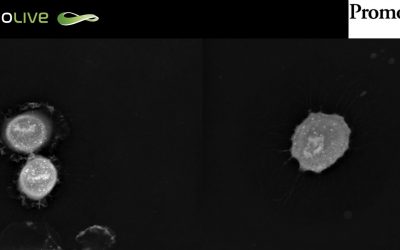
Human Umbilical Vein Endothelial Cells (HUVECs) were first cultured in 1973[1]. Since then, their isolation protocols have improved and they have become a model system for the study of a variety of vascular pathologies, such as inflammatory disease, atherosclerosis...
New publication: Autophagosome accumulation-mediated ATP energy deprivation induced by penfluridol triggers nonapoptotic cell death of lung cancer via activating unfolded protein response
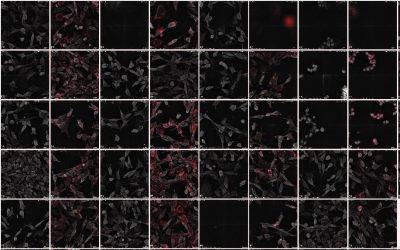
Nanolive is happy to announce a new publication on the Official journal of the Cell Death Differentiation Association by our customers at the Taipei Medical University in Taiwan[1]. Non-small-cell lung cancers (NSCLCs) are the most common type of lung cancer....
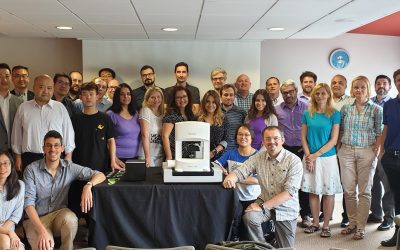
Nanolive holds its first global distributor meeting
Last month, Nanolive invited to its first global distributor meeting. Our partners from USA, Japan, Australia, China, Taiwan, South Korea, India, Turkey, Russia, Israel, Italy, Nordics, Croatia, Czech Republic, Poland, UK came to participate to meetings, workshops and...
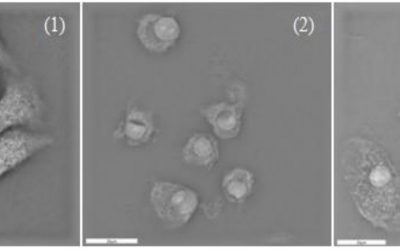
New publication: Quantification of changes in cellular morphology during cell necrosis obtained from 3D refractive index distributions
We are happy to announce a new publication in the Journal of Physics from users of the Nanolive’s 3D Cell Explorer in the Ioffe Institute in St. Petersburg, Russia. Photodynamic therapy is a common treatment against some types of cancer, like esophageal cancer and...
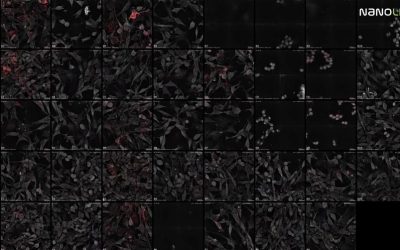
Free Webinar July 30: Automated Label-free Live Cell Imaging with the CX-A
We invite you to subscribe to our free webinar held on July 30 by clicking here: https://events.genndi.com/channel/cx-a-webinar. Dr. Mathieu Frechin, Head of Quantitative Biology at Nanolive will introduce you the CX-A and its functionalities. He will outline the...
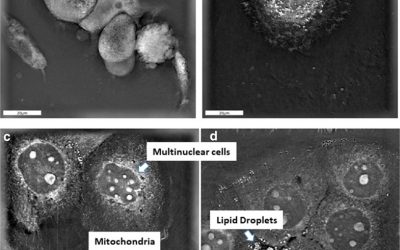
New publication: Pleiotropic Effects of Epithelial Mesenchymal Crosstalk on Head and Neck Cancer: EMT and beyond
We are pleased to announce a new publication from users of the Nanolive’s 3D Cell Explorer in the Medical University of Innsbruck, in Austria[1]. Epithelial mesenchymal crosstalk (EMC) describes the interaction between tumor stroma and its associated fibroblasts with...
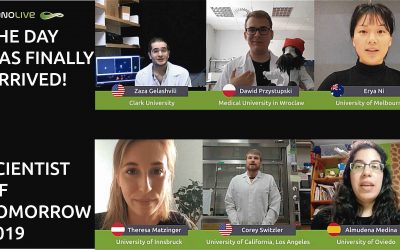
Scientists of Tomorrow 2019: The Verdict
The second edition of our Scientists of Tomorrow contest for undergraduate students brought us many applications from all over the world. Nanolive wants to thank all the participants for taking part in this year’s contest. We are overwhelmed by the amount and...

Nanolive at ISSCR from 26-29 June – Los Angeles
Join Nanolive and our partner Nexus at Booth #SUP8 at ISSCR in Los Angeles next week from 26-29 June. The conference will be held at the Lost Angeles Convention Center, California, USA. For more information, visit their website:...
The world of 3D cells is now open for EPFL students to explore
We are happy to share with you the news that the EPFL is the first university in Switzerland to acquire a 3D Cell Explorer for educational purposes. EPFL's press release can be found here: https://actu.epfl.ch/news/the-world-of-3d-cells-is-now-open-for-epfl-student/....
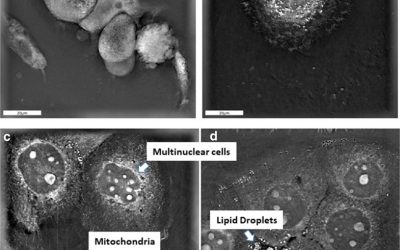
ADC Trigger Selective Cancer Cell Death
Chemotherapy has been used to treat cancer for almost 80 years now[1] and its side effects are well known and documented. One of the main limitations associated with standard chemotherapy is the unspecific killing of healthy cells (e.g. rapidly dividing cells in the...
![New publication of the Key Laboratory of Heavy Ion Radiation Medicine of Chinese Academy of Sciences[1]](https://vkv7flpfqbb.c.updraftclone.com/wp-content/uploads/Capture-29-400x250.jpg)
New publication of the Key Laboratory of Heavy Ion Radiation Medicine of Chinese Academy of Sciences[1]
Nanolive is proud to announce a new publication in the journal Theranostics from users of the Nanolive’s 3D Cell Explorer in the Laboratory of Heavy Ion Radiation Medicine of Chinese Academy of Sciences in Lanzhou, China. Mitochondrial metabolic abnormalities have...
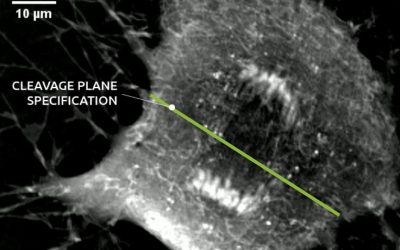
From one to two: cytokinesis in mesenchymal stem cells
Cytokinesis, as we briefly introduced in our mitosis in Mesenchymal Stem Cells post, refers to the obtention of two separated daughter cells after mitosis[1]. The process of separation can coincide in time with anaphase and/or telophase, the two final steps in...
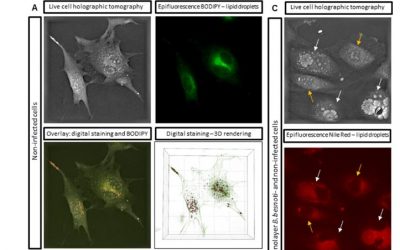
New publication of the Justus-Liebig University of Giessen
Nanolive is pleased to share a new publication in Nature Scientific Reports from our users in the Justus-Liebig University of Giessen [1]. Besnoitia besnoiti is an emerging parasite in Europe, responsible for bovine besnoitiosis, an illness causing a significant...
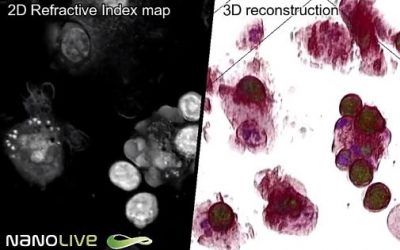
Join us at the ELMI meeting from 4 – 7 June in Brno, Czech Republic
Nanolive will be happy to discuss with you at the annual Meeting of the European Light Microscopy Initiative (ELMI) next week from 4 - 7 June. Find Senior Application Specialist Luca at exhibition space number 23 together with our partner HPST s.r.o. For more...
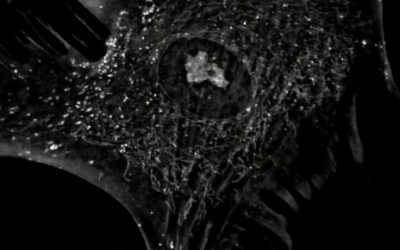
Human Mesenchymal Stem Cells in vivo: The Cytoskeleton
Since their description in the 1970s1, mesenchymal stem cells (MSC) have been at the center of very active research with the challenge of using them as therapy in organ and tissue repair. For that purpose, it has been essential to develop culture protocols that would...
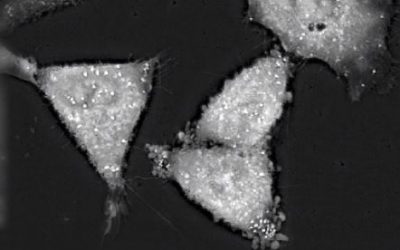
New publication of the Kaohsiung Medical University Hospital of Taiwan
Nanolive is proud to announce a new publication in the Oxidative Medicine and Cellular Longevity journal from our customers in the Kaohsiung Medical University Hospital of Taiwan. Lung cancer is at the top of the causes of cancer death in the world, with less than 30%...